You usually notice thinning hair in ordinary moments first – harsher bathroom lighting, a widening part, more scalp showing in photos, or a ponytail that no longer feels as full. That is why non surgical hair restoration treatment has become such a sought-after option. People want real improvement without the commitment, downtime, or recovery that comes with surgery, and they want a plan that feels medically guided rather than guesswork.
What non surgical hair restoration treatment really means
A non surgical hair restoration treatment is any clinically guided approach designed to support thicker, healthier-looking hair without transplant surgery. Depending on the cause of hair loss, that can include growth factor treatments, PRP, scalp-focused therapies, exosome-based approaches, prescription support, nutraceuticals, and in some cases device-based stimulation such as low-level light therapy.
The key point is that hair restoration is not one treatment. It is a category. The right option depends on whether you are dealing with genetic thinning, hormonal shifts, postpartum shedding, stress-related loss, inflammation, scalp imbalance, or hair miniaturization that has been happening slowly over time.
This is where a medspa or medical aesthetic setting can offer real value. A personalized plan looks at the scalp, the pattern of loss, your health history, and the pace of change before recommending treatment. That approach is far more effective than chasing trends one product at a time.
Who is a good candidate for non surgical hair restoration treatment?
The best candidates are usually people in the earlier or moderate stages of hair thinning. If the follicle is still active, even if it is producing weaker, finer hair, there is often more room to improve density and quality. Men and women can both benefit, especially when they want a lower-downtime option that fits into a busy schedule.
This type of treatment is often a strong fit for people noticing increased shedding, a receding hairline, widening parts, diffuse thinning, or reduced volume after stress, illness, hormones, or aging. It can also be a good fit for patients who are not ready for surgery, are not candidates for transplant, or simply prefer to start with a less invasive plan.
There are limits, though. If an area has been completely dormant for a long time, results may be more modest. Non-surgical options can improve the appearance of density, support healthier growth cycles, and strengthen existing follicles, but they do not always recreate what has been lost in advanced baldness. Honest consultation matters here.
The most common treatment options
PRP and regenerative scalp treatments
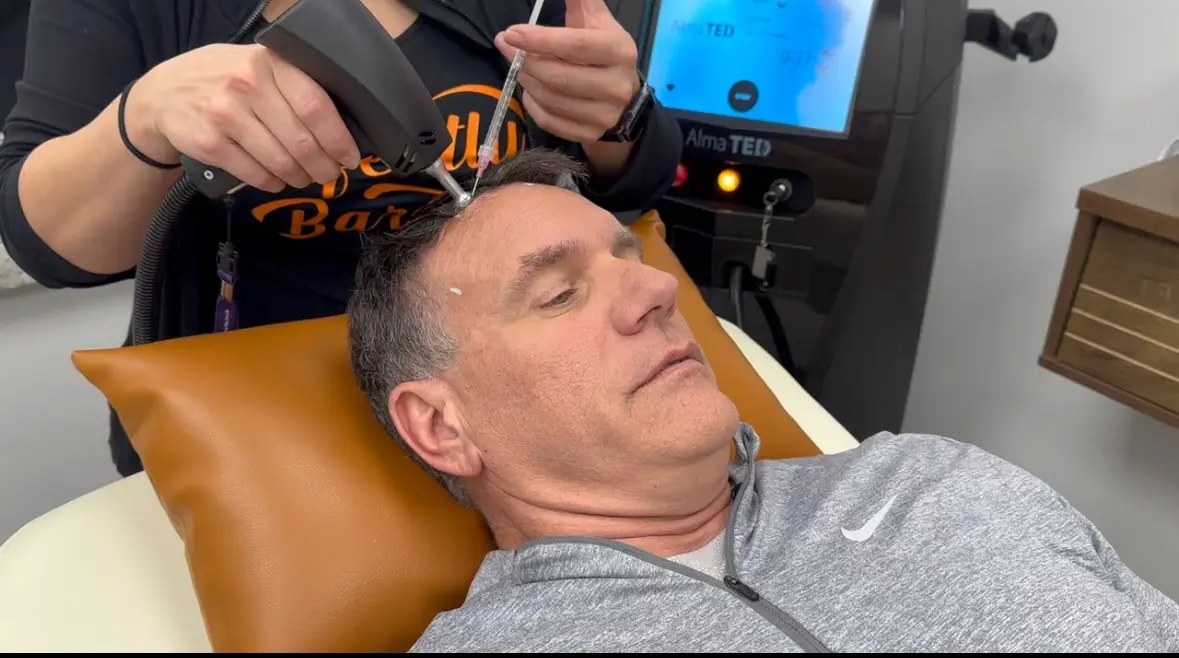
Platelet-rich plasma, or PRP, is one of the most recognized options in non-surgical hair restoration. It uses components drawn from your own blood, processed and then delivered into the scalp to support the follicles. The goal is to improve the environment around the hair root so weakened follicles can function more effectively.
PRP is popular because it is minimally invasive and built around the body’s own regenerative potential. Many patients choose it when they want a treatment with little downtime and a medical rather than cosmetic foundation. That said, results vary. Some patients respond very well, while others need a broader combination plan.
More advanced regenerative approaches may also include growth factors or exosome-based support, depending on the provider’s protocols and your candidacy. These options are often positioned for patients who want a more intensive scalp rejuvenation strategy.
Prescription and topical support
For some patients, medical therapy is part of the strongest plan. Topical and oral options may be used to slow progression, reduce shedding, or support stronger growth over time. These can be highly effective, especially for androgenetic hair loss, but they need the right screening and supervision.
This is where trade-offs come in. Prescription support can be convenient and powerful, but it may require long-term use to maintain results. Some people do very well with medication as a foundation and in-office treatments as an accelerator. Others prefer to avoid certain medications and focus on procedural options instead.
Low-level light therapy and scalp health support
Device-based scalp stimulation can also play a role. Low-level light therapy is designed to support follicle activity through light energy delivered to the scalp. It is non-invasive and easy to integrate into a routine, which appeals to patients who want a low-maintenance addition to a broader plan.
Scalp health should not be overlooked either. Inflammation, buildup, irritation, and poor circulation can all work against healthy growth. Sometimes improving the condition of the scalp is what makes other treatments perform better. A polished hair restoration program should look beyond the strand and address the full scalp environment.
Why combination treatment usually works better
Hair loss is rarely one-dimensional, so treatment should not be either. A patient may have hormone-related shedding layered on top of genetic thinning, or stress-related loss happening alongside inflammation and poor scalp health. Treating only one piece may help, but it may not get the best result.
That is why combination protocols often outperform one-off sessions. An in-office regenerative treatment may stimulate the follicle, while prescription support helps protect it, and scalp care improves the environment around it. Together, that can create a more noticeable change in fullness, quality, and retention.
For many patients, the most effective plan is phased. It starts with a correction phase to reduce shedding and stimulate growth, then moves into maintenance. That structure sets more realistic expectations and helps preserve progress over time.
What results actually look like
The biggest mistake patients make is expecting immediate density. Hair grows slowly, and follicles cycle through phases. Even a very effective non surgical hair restoration treatment usually needs time before visible improvement shows up.
Most patients begin with a series of treatments and then monitor progress over several months. Early wins may include less shedding, improved texture, stronger strands, and hair that feels healthier before it looks dramatically fuller. Visible thickening typically comes later.
Results also depend on consistency. Hair restoration is closer to fitness than a one-time cosmetic fix. If you stop supporting the follicle entirely, especially with ongoing genetic or hormonal triggers, improvement can fade. The goal is not just to spark growth but to create a plan you can realistically maintain.
Questions to ask before you start
Not every provider approaches hair restoration with the same level of medical detail. Before starting, ask what is causing your thinning, what treatment options fit your pattern of loss, how progress will be tracked, and what maintenance may be needed. If the answer sounds overly simple, it probably is.
You should also ask about downtime, discomfort, expected timelines, and whether your treatment plan includes both in-office care and at-home support. Premium technology and advanced protocols matter, but so does thoughtful customization. The best programs are not built around selling the most sessions. They are built around solving the right problem.
For patients in the Tampa area who already invest in aesthetics and wellness, this is often what makes a trusted MedSpa feel different from a basic beauty service. The experience should feel expert-led, clear, and personalized from the first consultation forward.
Is non surgical hair restoration treatment worth it?
For the right candidate, yes. It can be one of the most worthwhile treatments because the impact is both cosmetic and personal. Fuller-looking hair can change how you style it, how you show up in photos, and how confident you feel in everyday life. When the plan is medically guided and tailored to the cause, the results often feel more natural and more sustainable than patients expect.
It is also an appealing choice for people who want meaningful improvement without putting life on hold. There is comfort in knowing you can pursue stronger, healthier hair through advanced, low-downtime options rather than jumping straight to surgery.
If your hair has been changing and you are waiting for it to somehow correct itself, that is usually the wrong strategy. Hair restoration tends to work best when you act early, while the follicle still has something to work with. The sooner you get clarity on the cause, the more options you usually have.